
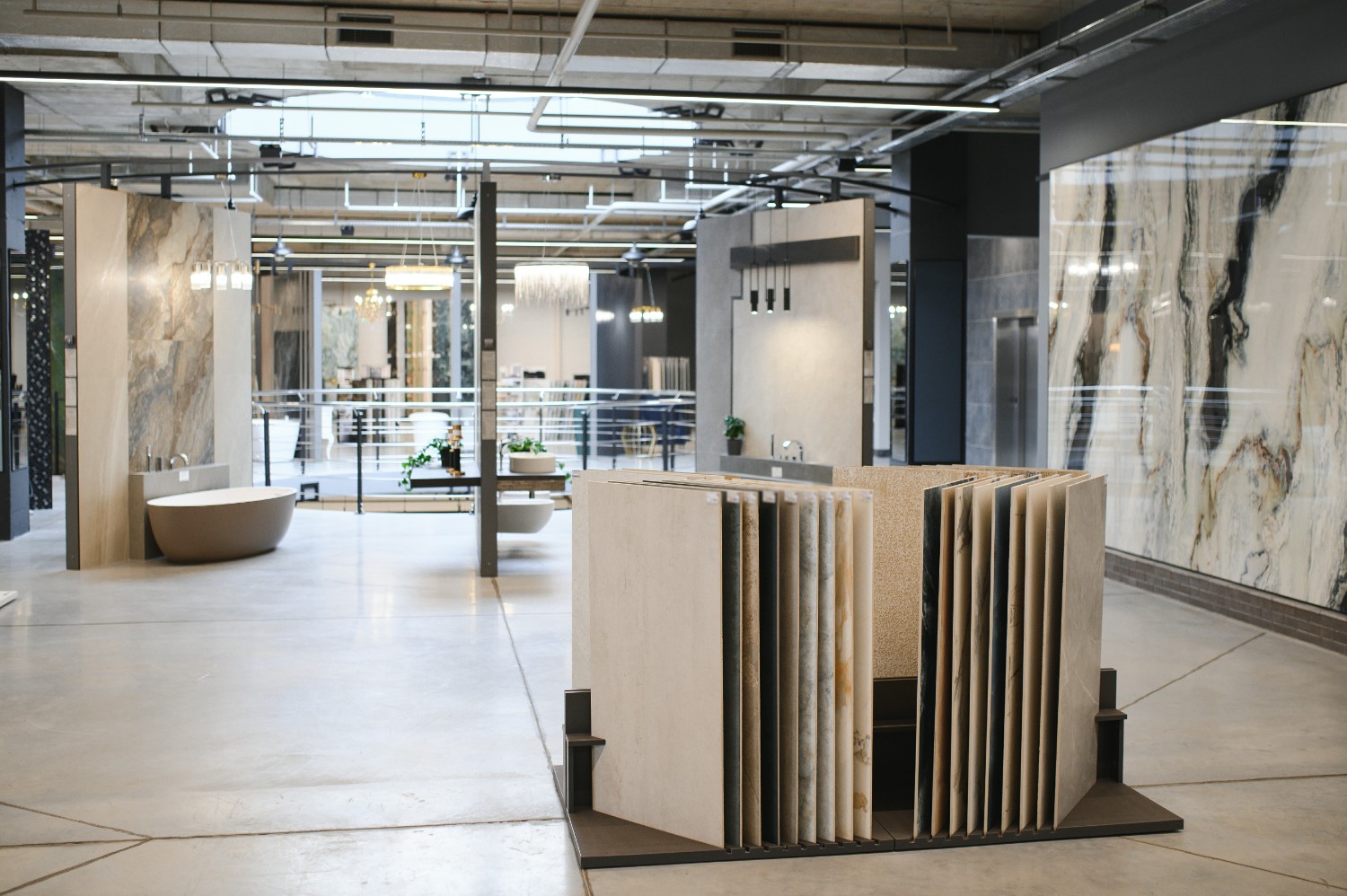
International buyers sourcing vitrified tiles from India should prioritize partnering with manufacturers based in Morbi, Gujarat—the country’s ceramic hub. Key factors to evaluate include technological standards (such as SACMI-backed plants), precise water absorption rates (under 0.5% for vitrified porcelain), varied finishes like high-gloss and carving, and reliable export logistics to ensure global compliance and damage-free delivery.
Why Is Sourcing Materials Internationally So Important?
Sourcing construction and interior finishing materials internationally requires careful planning, especially when dealing with a massive market like India. As global demand for durable and aesthetic flooring grows, understanding the nuances of procurement becomes vital for wholesalers, builders, and developers.
What Will You Learn in This Guide?
This guide breaks down everything international buyers need to know before placing bulk orders, helping you streamline your supply chain, evaluate manufacturing capabilities, and select products that match international expectations. You can explore a wide variety of architectural surface solutions directly through the Avalta Granito Products Catalogue.
Why Is Morbi, Gujarat the Epicenter of Indian Tile Sourcing?
Morbi has evolved into the ceramic capital of India, housing state-of-the-art production plants that rival the best in Europe. For global importers, buying from this region provides access to robust manufacturing infrastructure and competitive pricing.
- Advanced Machinery: Leading facilities integrate high-performance European machinery—such as SACMI tech—to ensure absolute dimensional accuracy and structural strength.
- Massive Production Scale: Hundreds of specialized units allow for high-volume manufacturing without compromising on design variety or delivery timelines.
- Global Shipping Access: Proximity to major ports like Mundra and Kandla facilitates smooth, cost-effective ocean freight logistics to the Middle East, USA, Europe, and Africa.
To understand the core values, vision, and manufacturing standards behind top-tier Indian production, read more on the About Avalta Granito.
What Tile Finishes and Specifications Should You Look For?
Selecting the right surface finish and material composition ensures long-term customer satisfaction. International projects demand specific technical properties depending on whether the application is residential or commercial.
Tile Type / Series | Primary Surface Finish | Ideal Application Area | Key Technical Advantage |
PGVT / GVT | High-Gloss / Matt | Living Rooms, Luxury Lobbies | Minimal water absorption (<0.5%), high scratch resistance |
Carving Collection | Textured / Matte | Feature Walls, Premium Interiors | Unique tactile depth and sophisticated visual texture |
Wood-Look Series | Natural Wood Grain | Bedrooms, Hospitality Projects | Combines wood aesthetics with porcelain durability |
Double Charge | Glossy / Smooth | High-Traffic Commercial Zones | Extra-thick wear layer for maximum longevity |
For deep dives into specific product categories, you can review detailed specifications on the Avalta Granito.
How to Verify Quality and Certifications Before Import?
Quality control protects your brand reputation and minimizes costly site replacements. Importers must vet suppliers against rigorous international benchmarks.
- Check ISO Compliance: Ensure your manufacturer holds certifications like ISO 9001 (Quality Management), ISO 14001 (Environmental Management), and ISO 45001 (Occupational Health & Safety).
- Inspect Physical Properties: Request factory test reports covering breaking strength, slip resistance, chemical resistance, and frost resistance.
- Evaluate Packaging Standards: Confirm that tiles are packed in heavy-duty export-grade corrugated boxes with wooden pallets and edge protectors to prevent transit breakage.
For questions regarding customized bulk orders, quality checks, or export documentation, you can reach out directly via the Contact Avalta Granito.
Frequently Asked Questions
1. What is the typical lead time for shipping vitrified tiles from India?
Standard manufacturing and dispatch generally take between 2 to 4 weeks depending on the order volume and customization requirements. Ocean transit times vary based on the destination port (e.g., 10–20 days for the Middle East, 30–45 days for Europe and the Americas).
2. What makes vitrified porcelain tiles better than standard ceramic tiles?
Vitrified porcelain tiles undergo a high-temperature firing process that vitrifies the mixture into a dense, glass-like body. This results in significantly lower water absorption rates (less than 0.5%), higher breaking strength, and superior frost and stain resistance compared to traditional ceramic.
3. Can I request custom sizes and designs for large commercial projects?
Yes. Most leading manufacturers in Morbi accommodate custom size requests, unique surface carvings, and specific packaging or branding requirements for large-scale real estate developments.
4. How are tiles securely packaged for international freight?
Export shipments are stacked on fumigated wooden pallets, interleaved with protective foam sheets, shrink-wrapped securely, and reinforced with plastic or metal strapping to withstand long-distance maritime transport.
What to Do Next
Sourcing vitrified tiles from India is a strategic move that combines premium craftsmanship with high cost-efficiency. By partnering with certified manufacturers who understand global trade compliance, rigorous quality assurance, and secure logistics, you can secure reliable supply chains for your market. Review your project requirements, request physical sample kits, and connect with trusted industry leaders to elevate your next architectural development.